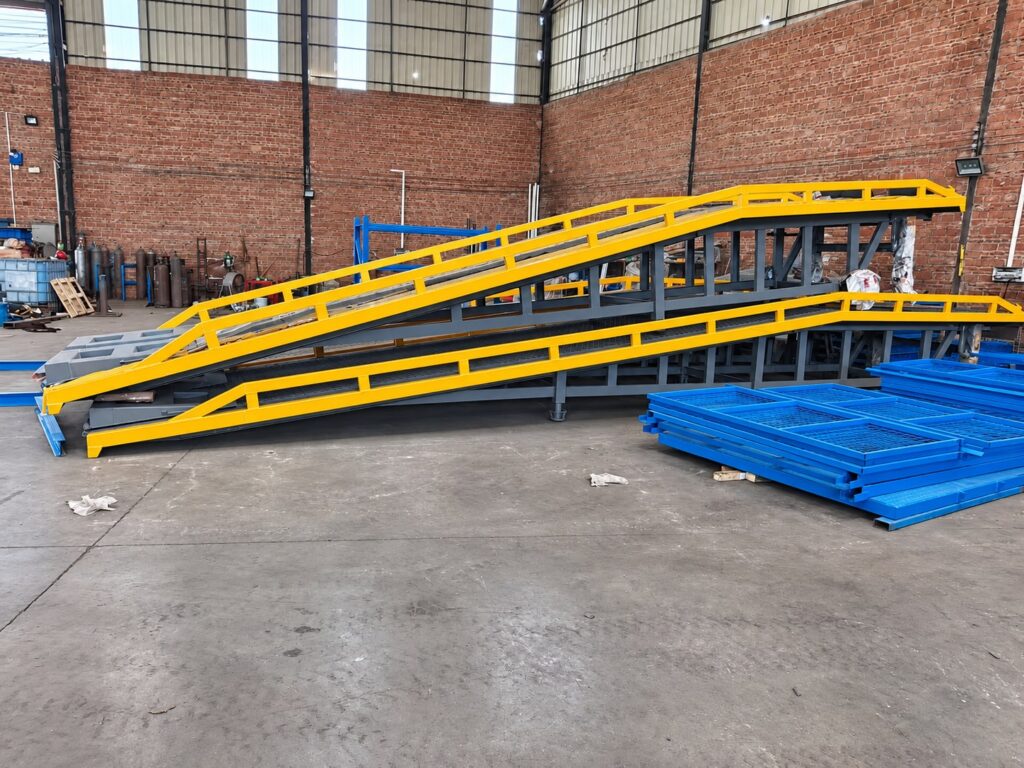
A mobile yard ramp creates a practical bridge between ground level and a truck or container floor, allowing forklifts and pallet-handling equipment to move cargo where a permanent loading dock is unavailable. The equipment shown here combines a reinforced steel frame, a long inclined deck and a relocatable chassis, making it suitable for factories, warehouses, logistics yards and temporary loading areas.
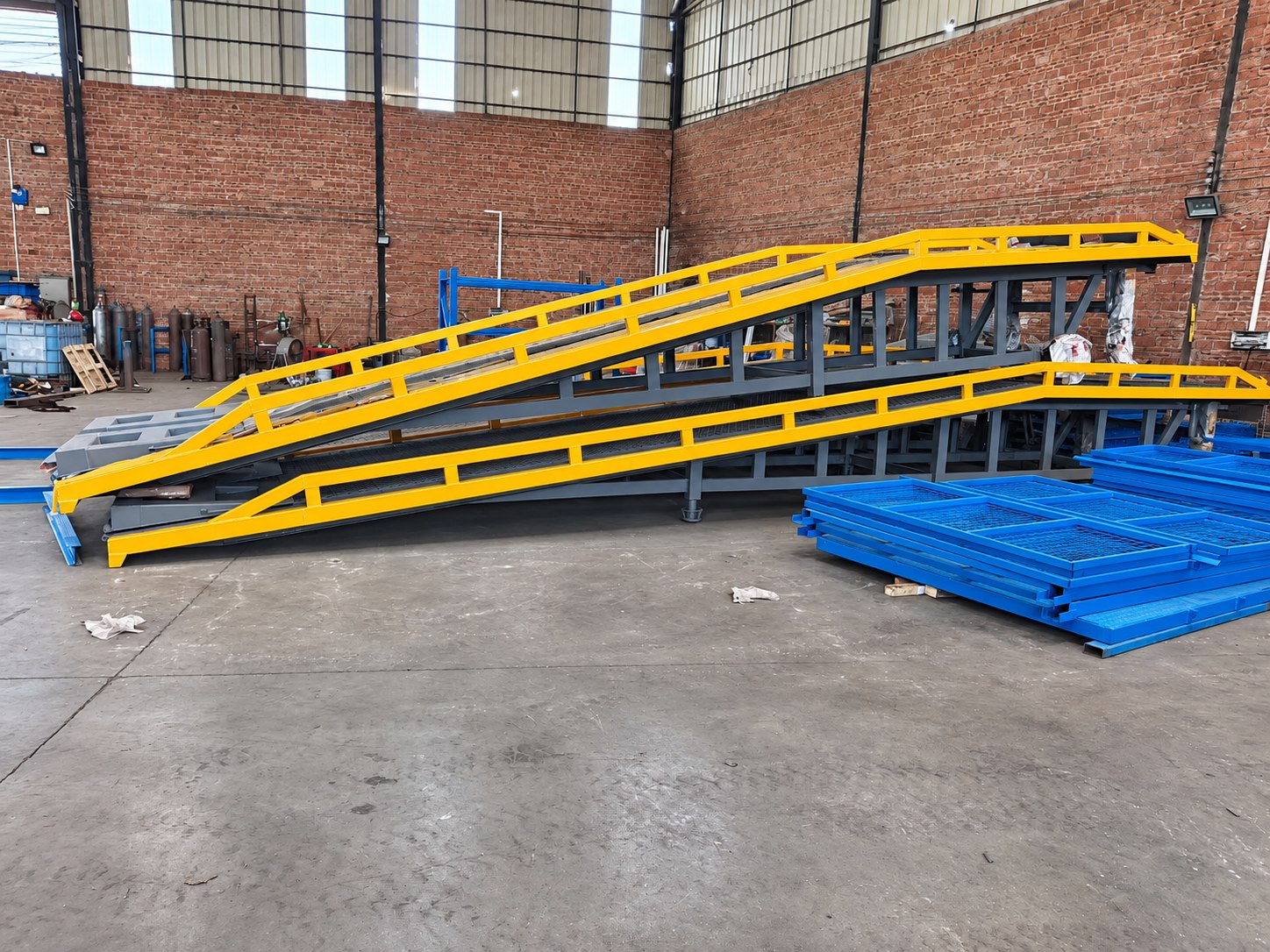
Industrial appearance and structural design
The yellow guardrails provide clear visual contrast around the travel path, while the dark structural frame supports the inclined approach and upper platform. The long transition profile helps create a controlled route from the yard surface to the vehicle floor. A steel grating deck gives forklift tyres a durable running surface and allows rainwater, dust and small debris to pass through more easily than a closed flat plate.
The underframe is divided into reinforced sections to distribute working loads along the ramp. Entry and exit transitions should be matched to the forklift wheelbase, ground clearance and the height range of the trucks or containers served. These details are confirmed during project selection rather than assumed from a standard photograph.
Mobility, positioning and stability
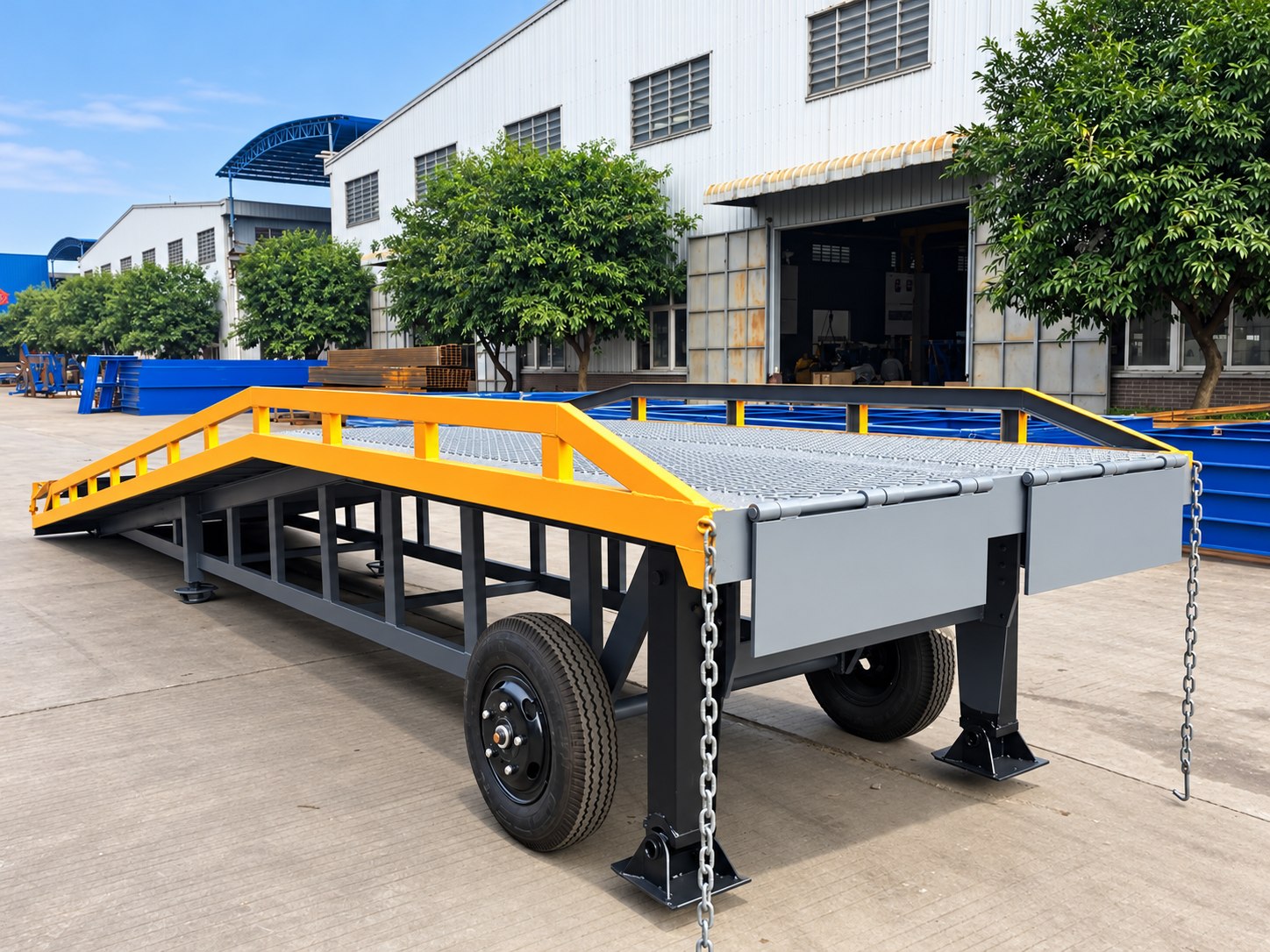
The wheel assembly allows the ramp to be relocated within a yard when the loading point changes. Once positioned, support legs help transfer the working load to the ground. Safety chains provide an additional connection point to the vehicle or designated anchoring position. Before every loading cycle, operators should check that the surface is level and capable of supporting the ramp, deploy the supports, apply vehicle brakes and wheel chocks, and confirm that the ramp is secured against unintended movement.
Performance depends on the complete loading system
Ramp performance cannot be judged by deck size alone. The correct configuration is based on the maximum combined weight of the forklift, operator and cargo; the vehicle-floor height range; the required clear width; the preferred gradient; operating frequency; wheel type; and the site environment. The height-adjustment method and control arrangement are selected for the project. For outdoor use, drainage, corrosion protection and routine cleaning also affect long-term reliability.
A well-matched ramp supports smoother material flow by reducing unnecessary cargo transfers. It can help a forklift travel directly between the yard and a truck or container, which is especially useful for facilities without a raised dock, rented warehouses, seasonal loading points and sites that need flexible logistics equipment.
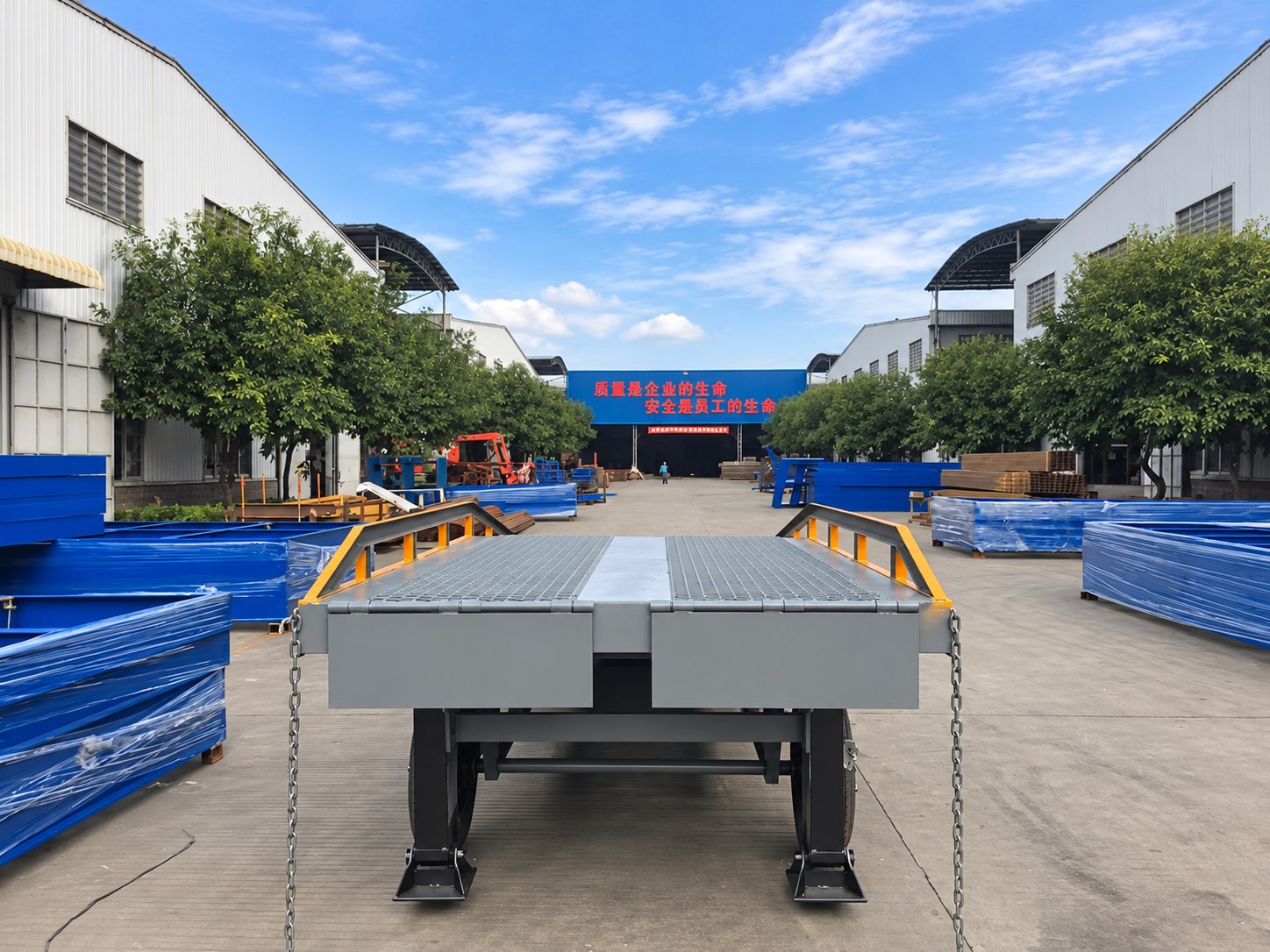
Typical applications
- Loading and unloading palletised goods from trucks and shipping containers
- Factories that need a temporary link between production areas and vehicle beds
- Warehouses without a permanent dock or with seasonal overflow traffic
- Distribution yards where loading points change between bays
- Project sites that require movable material-handling equipment
Safe operating workflow
- Inspect the deck, frame, wheels, supports, chains and adjustment system before use.
- Position the ramp on a firm, level surface and align it with the vehicle.
- Apply the vehicle parking brake and wheel chocks, then deploy every required support and restraint.
- Confirm that the deck is dry, clean and free from loose material.
- Keep pedestrians outside the loading route and operate the forklift at a controlled speed.
- Stop work if the ramp, vehicle or ground moves unexpectedly.
Information needed for a project-specific quotation
To recommend a suitable mobile yard ramp, Hongli Lift reviews the truck or container types, minimum and maximum floor heights, maximum loaded forklift weight, forklift wheelbase and ground clearance, required usable width and length, daily operating frequency, yard surface, indoor or outdoor conditions, preferred adjustment method, destination country and applicable local standards. Drawings and technical proposals can then be prepared around the actual loading task.
Planning a container or truck loading project? Contact Hongli Lift with your site dimensions and handling requirements, or explore our material-handling solutions.