
Industrial Hydraulic Cargo Lift with Safety Enclosure: Features, Performance and Applications
Moving pallets, components, tools and finished goods between floors can become a bottleneck when a building has limited space or when a forklift route is impractical. An industrial hydraulic cargo lift provides a direct vertical material-handling route between production, storage and dispatch areas. With a project-specific platform and a full-height mesh enclosure, the equipment can be integrated into factories, warehouses, workshops and mezzanine facilities while keeping the lifting area clearly separated from surrounding operations.
The installations shown in this article illustrate several enclosure styles and site layouts supplied for real industrial environments. Final platform size, rated load, lifting height, gate arrangement and control system should always be selected after reviewing the cargo, building conditions and local safety requirements.
A clean industrial appearance designed around the site
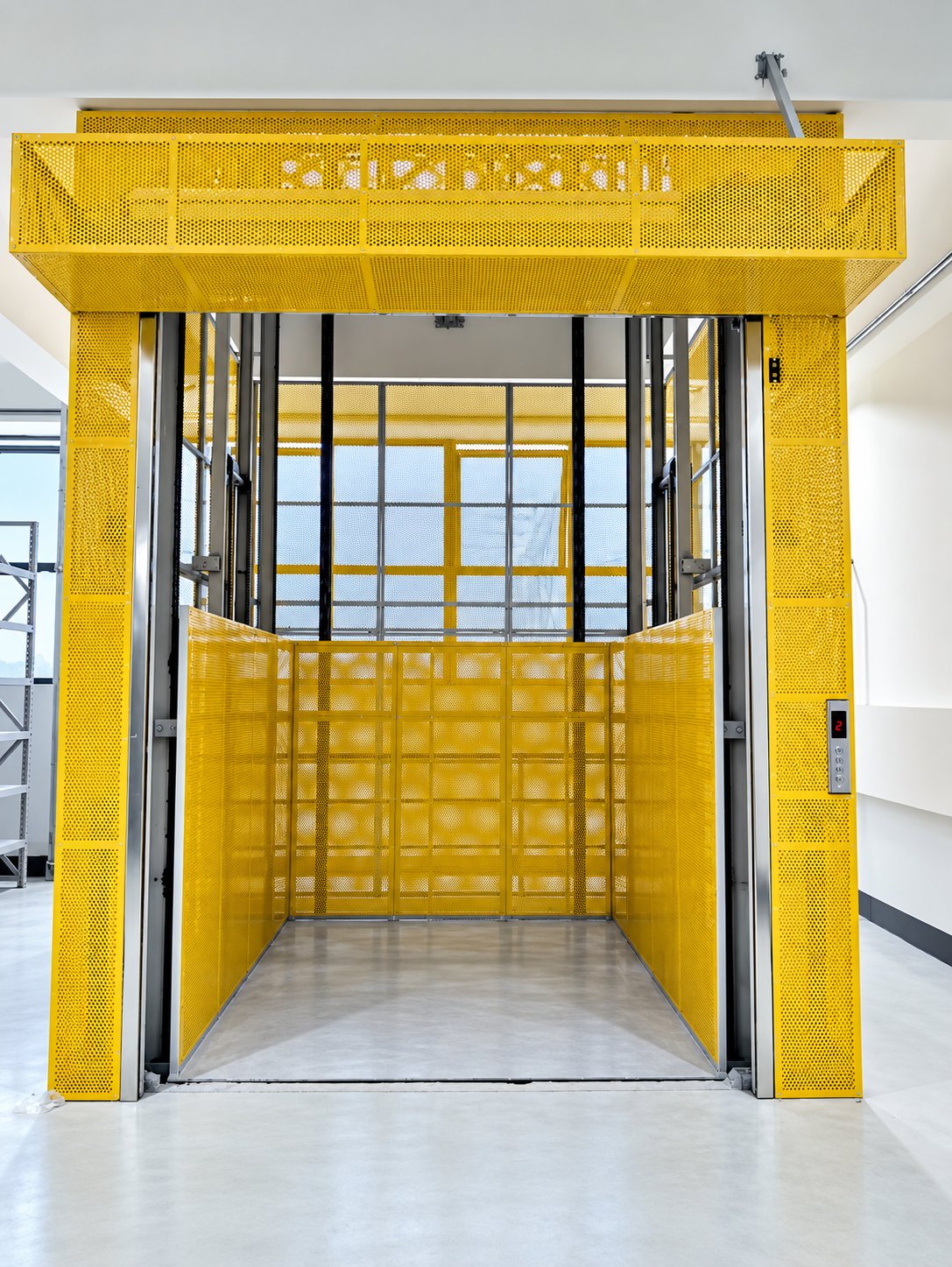
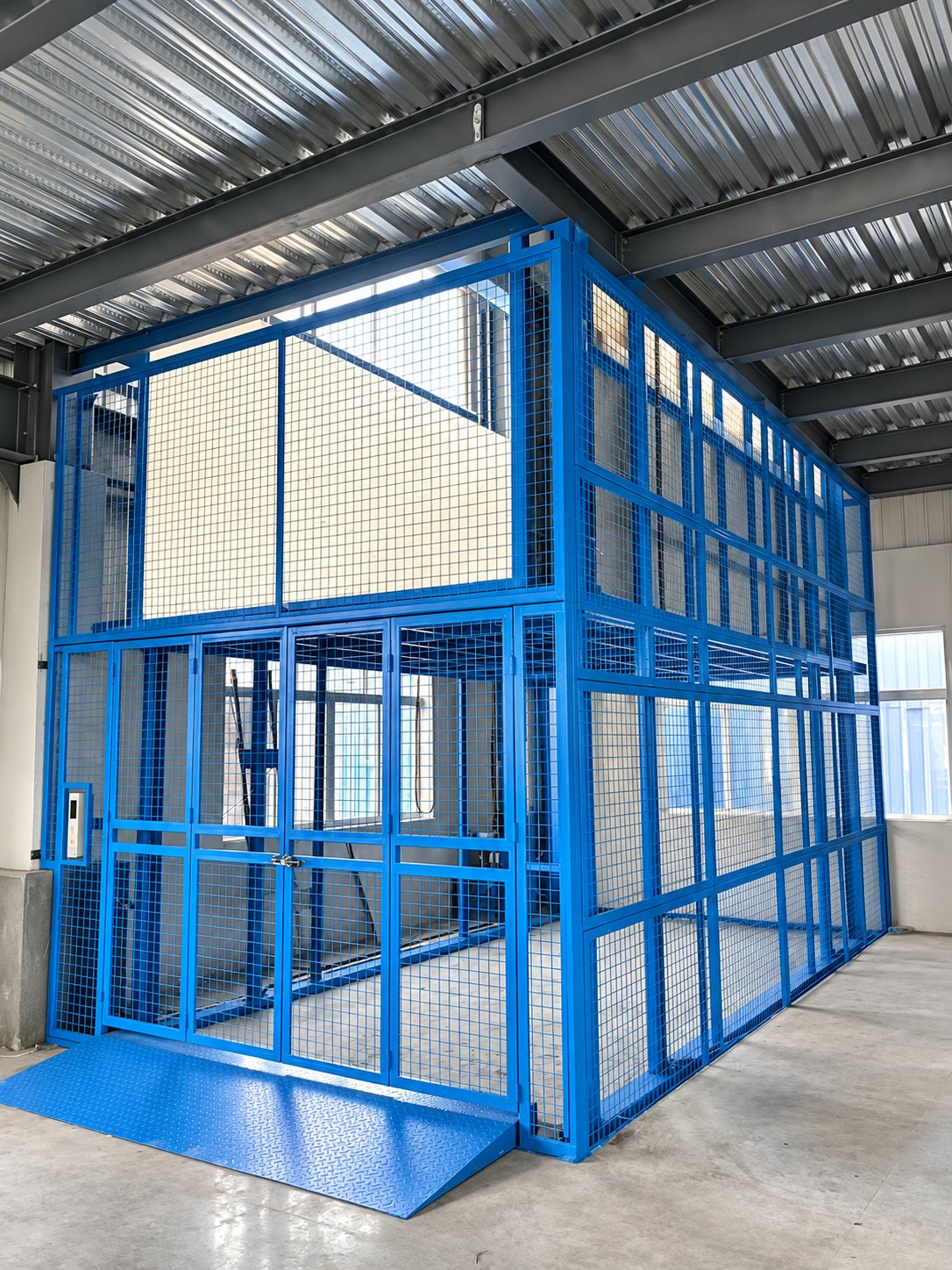
An enclosed cargo lift does not have to look like an afterthought. The examples use strong geometric frames, powder-coated steel mesh panels and high-visibility colour combinations. Yellow enclosures stand out clearly in busy work areas, while blue or black frames can match warehouse structures and production equipment.
The perforated or welded-mesh panels maintain visibility into the lift shaft while restricting access to moving parts. This open visual design also makes routine inspection easier than a completely opaque enclosure. Platform gates, landing gates, call stations and protective posts can be positioned to suit the material flow and the available floor space.
Full-height enclosure for a controlled lifting zone
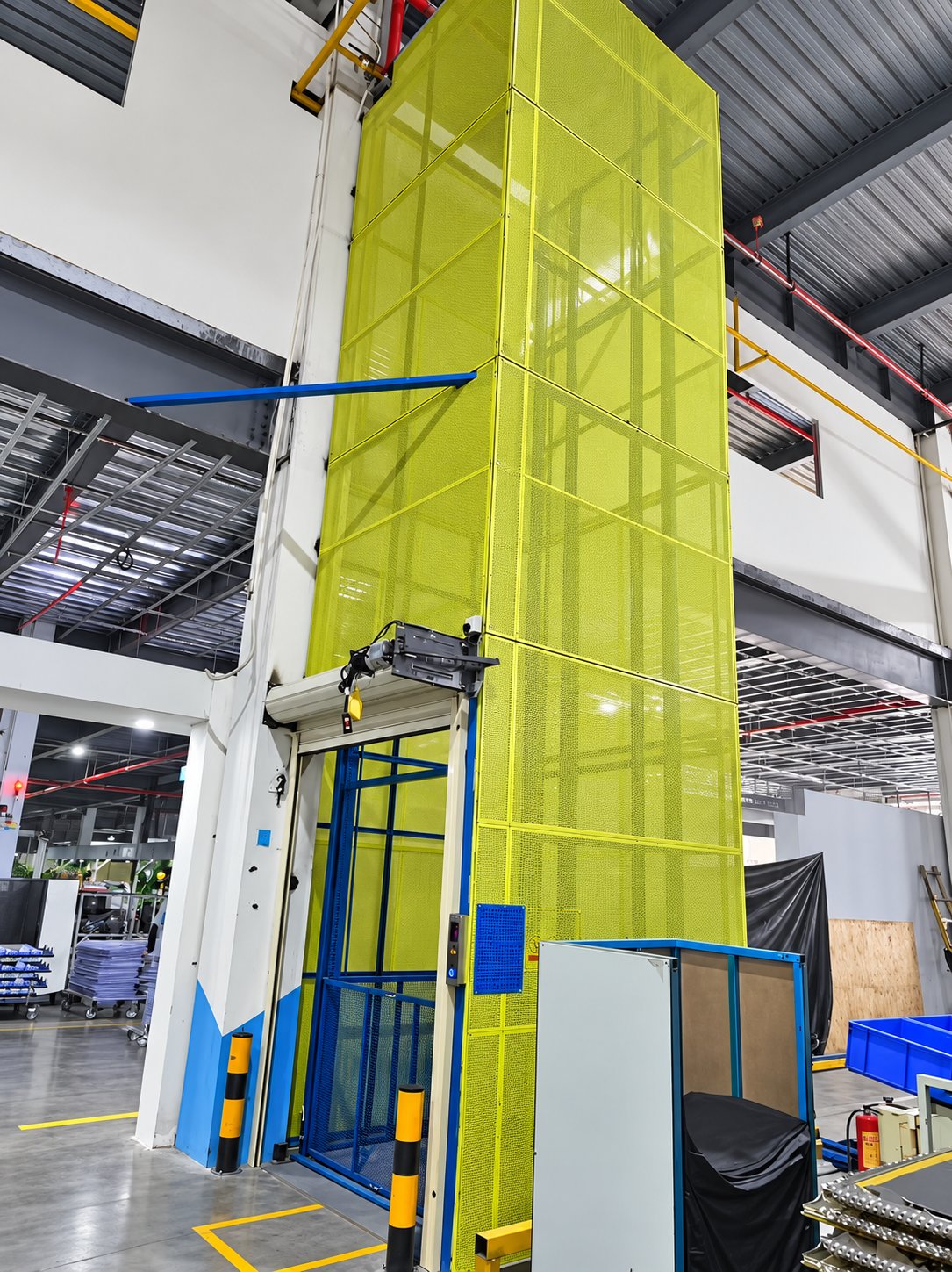
The safety enclosure defines the operating zone from the ground floor to the upper landing. It helps prevent people or loose materials from entering the travel path during operation. Depending on the project design, the enclosure can use perforated sheet, welded mesh or expanded-metal panels, with hinged, sliding or vertically operated landing gates.
Interlocked access gates can be specified so that lift movement is enabled only when the required gates are closed. Emergency-stop controls, upper and lower travel limits, overload protection and other safeguards are selected according to the machine design and applicable local requirements. A site risk assessment remains essential because every factory layout, landing arrangement and loading method is different.
Core features of an industrial hydraulic cargo lift
Project-specific lifting platform
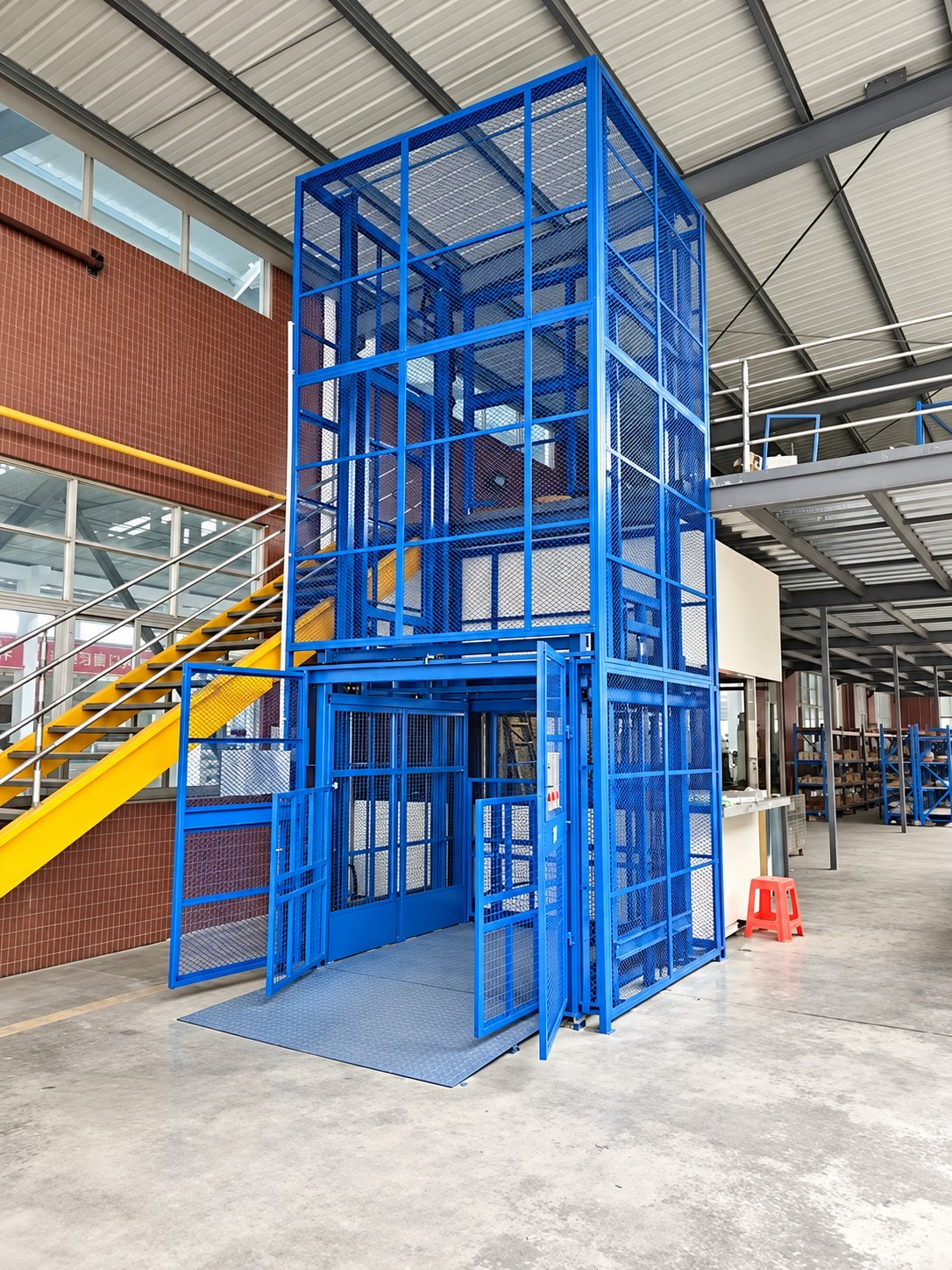
The platform can be configured around pallet dimensions, trolley size, material weight and the required loading direction. Single-entry, opposite-entry and adjacent-entry arrangements can be evaluated when planning the platform and gates. A chequer-plate deck provides a durable working surface for typical industrial loads.
Rigid guide and support structure
The guide structure controls the platform path during vertical travel. Its frame, guide arrangement and fixing method are engineered to match the rated load, travel height and building conditions. Existing columns, mezzanines and floor openings must be checked before manufacture so that the lift and the building interface work as one system.
Hydraulic lifting system
Hydraulic drive is well suited to low- and medium-rise goods movement because it can provide controlled lifting force and smooth starts and stops when correctly specified. The power unit, cylinders, hoses, valves and control logic are sized for the project duty. Actual lifting speed and operating frequency depend on platform size, load, travel and the selected hydraulic package.
Practical controls at each landing
Call stations can be installed at the required floors, with clearly marked controls for normal operation and emergency stopping. Position indicators, audible or visual warnings and access-control options may be added where the workflow or risk assessment requires them.
Performance focused on reliable material transfer
The main performance objective is consistent vertical movement of goods between defined levels. A correctly selected system should provide stable platform guidance, controlled acceleration and deceleration, accurate landing alignment and dependable operation within its designed duty cycle.
Performance is not determined by motor power alone. Cargo weight distribution, platform dimensions, travel height, number of starts per hour, ambient temperature, power supply and loading method all affect the final design. For humid or coastal locations in Southeast Asia, the coating system, electrical protection and maintenance plan should also be reviewed for the actual environment.
This equipment is intended for material handling. It should not be treated as a passenger elevator unless a separately certified design is supplied for that purpose and approved under the applicable local rules.
Typical applications
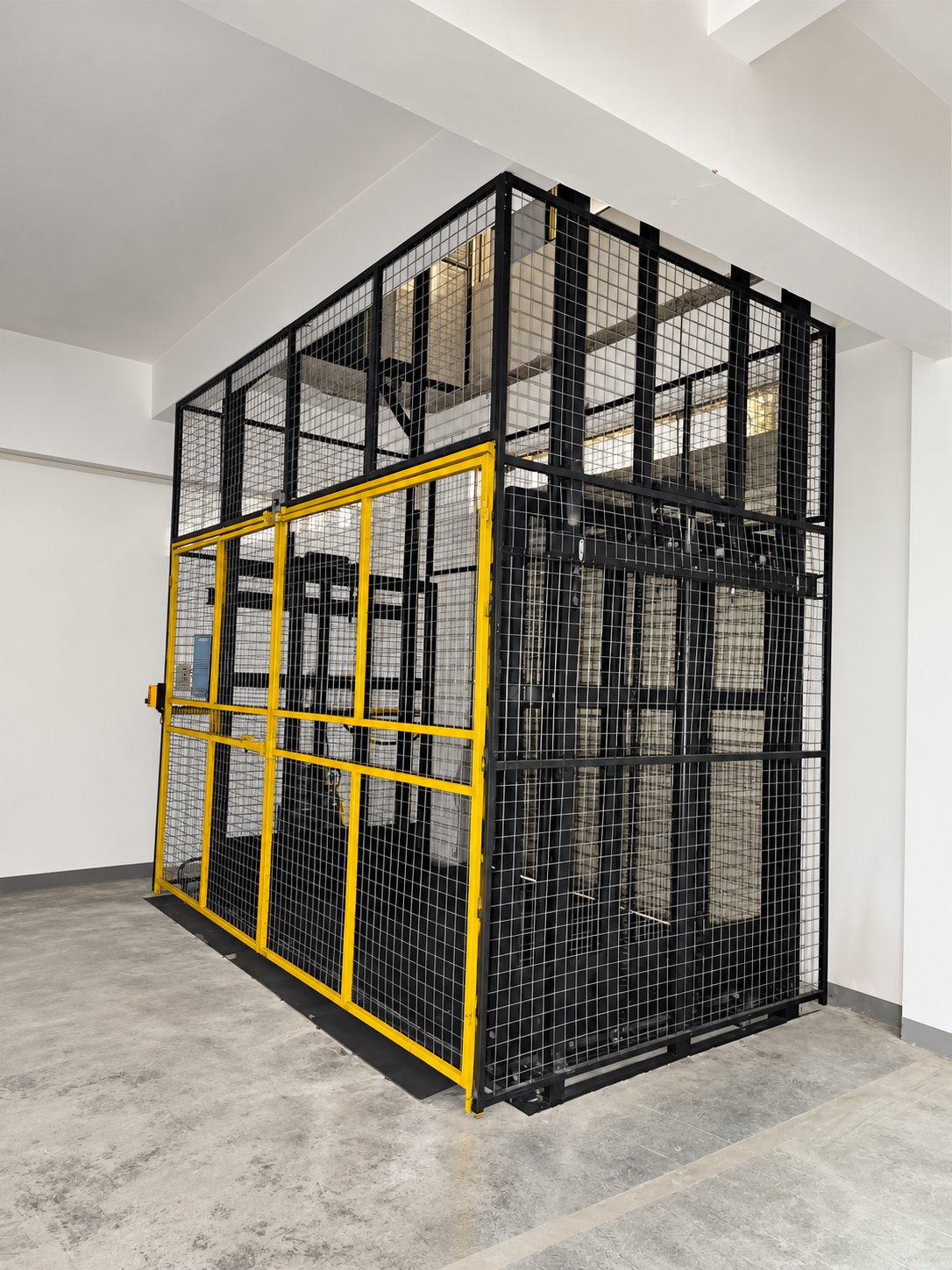
Industrial cargo lifts can improve workflow wherever materials must move repeatedly between fixed levels, including:
- factories moving components between production floors;
- warehouses transferring pallets or cartons to mezzanine storage;
- workshops handling dies, tools and maintenance equipment;
- distribution centres connecting packing, storage and dispatch areas;
- retail and commercial back-of-house areas moving stock between floors;
- industrial facilities where a long forklift ramp would use too much space.
A vertical route can shorten material travel, reduce manual handling and separate lifting operations from normal vehicle traffic. The benefit depends on choosing loading positions and platform dimensions that match the real workflow.
Information needed for an accurate quotation
Because an industrial hydraulic cargo lift is normally configured for the project, a useful enquiry should include:
- maximum cargo weight and how the load is distributed;
- cargo or pallet dimensions and the required platform size;
- number of floors, total travel height and each landing level;
- preferred loading directions and gate-opening type;
- available shaft, pit and overhead dimensions;
- indoor or outdoor location and the operating environment;
- local power supply and expected starts per hour;
- site photos, layout drawings and applicable local standards.
Hongli Lift can review this information and propose a suitable platform arrangement, enclosure concept and control configuration. All final technical parameters are confirmed in the approved project drawing and quotation.
Plan your vertical material-handling project
If you are planning a new warehouse, expanding a production line or improving an existing mezzanine workflow, Hongli Lift can help evaluate the lifting route and prepare a project-specific proposal. View our industrial lifting products or send your cargo and site requirements to request a quotation.