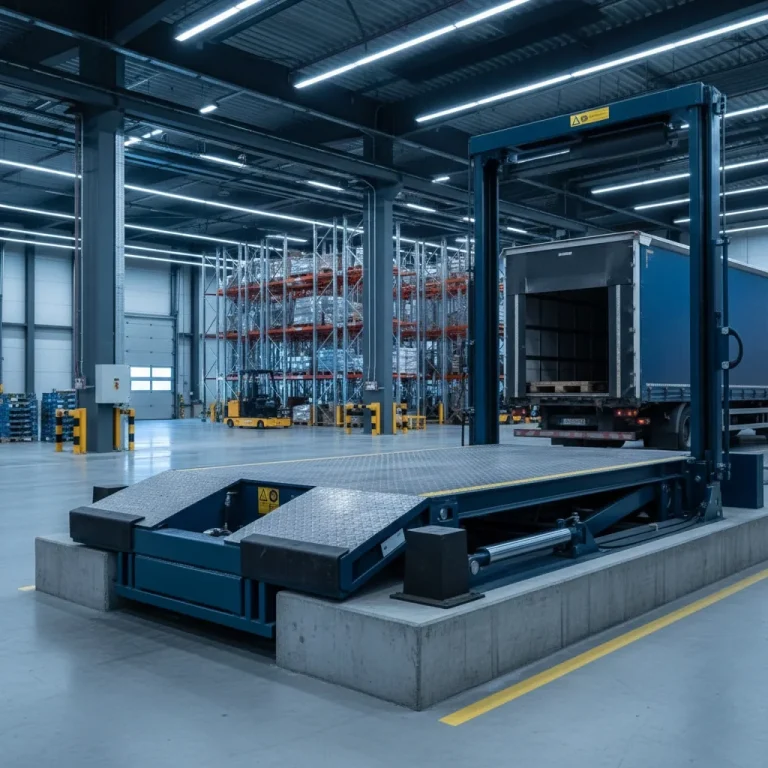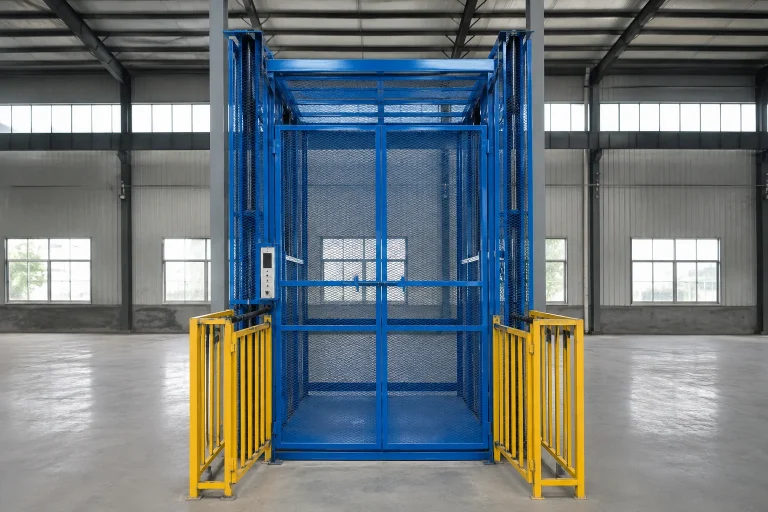
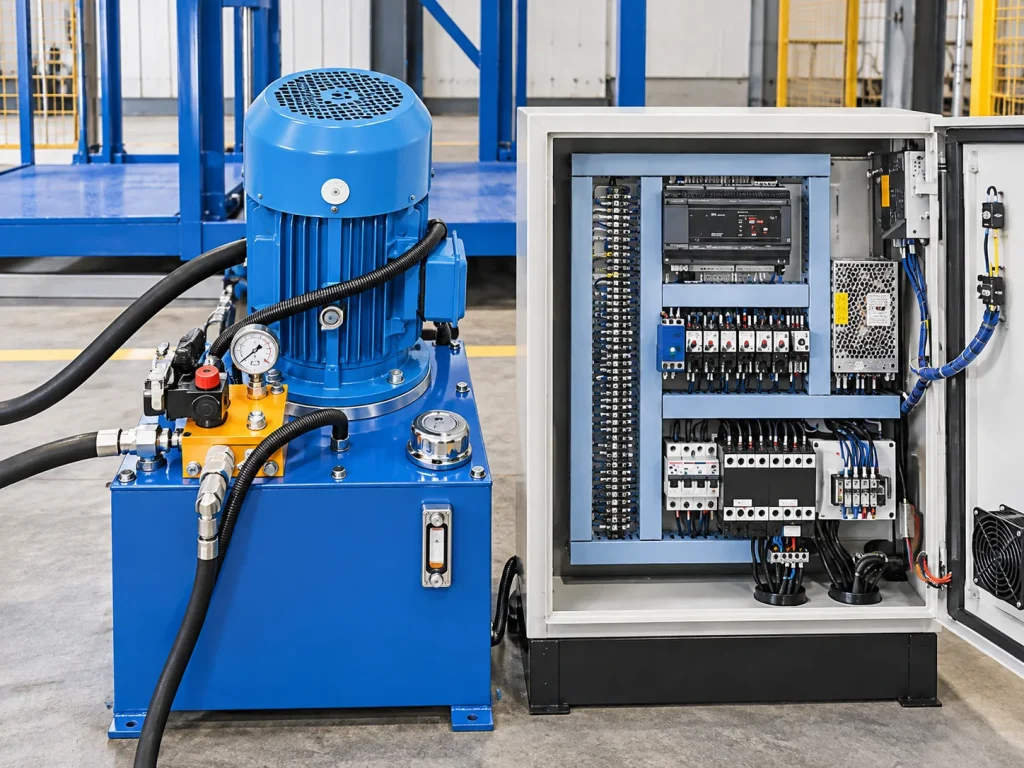
Industrial lifting equipment works as a complete system. Steel structures carry and guide the load, hydraulic components create movement, and electrical controls coordinate every command and safety input. The featured image shows a hydraulic power unit beside an electrical control cabinet—two areas that need to be understood together when commissioning or diagnosing a lifting platform.
Good equipment support begins before shipment and continues through installation, operation and planned maintenance. Clear information at each stage helps the owner avoid delays, protect the machine and return it to service more efficiently when a problem occurs.
Support starts with a complete technical handover
The supplier and buyer should confirm the final specification, approved drawing, electrical supply and installation responsibilities before production. At delivery, the documentation package should match the equipment supplied. Depending on the project, this may include a general arrangement, foundation or pit drawing, hydraulic diagram, electrical diagram, operating instructions, inspection points and parts information.
Equipment labels should match the drawings so a technician can identify cylinders, valves, sensors, terminals and control devices without guesswork. Record the model, serial information and final configuration in the maintenance file.
Commissioning verifies the machine and the site
Commissioning is more than checking whether the platform moves. The installer should verify fixing points, clearances, hydraulic oil level, hose routing, electrical protection, phase sequence where applicable, travel limits and gate or door interfaces. The platform should then be tested through the agreed operating sequence under controlled conditions.
Any acceptance test must follow the approved method and local requirements. Results, adjustments and open items should be recorded, and operators should receive training before the equipment enters normal service.
Create a preventive-maintenance routine
Maintenance frequency depends on cycles, load, environment and the manufacturer’s instructions. A useful routine combines operator checks with scheduled technical inspection.
- Before use: look for visible damage, obstacles, leaks, loose parts and abnormal control indications.
- Regular inspection: review pins, pivots, guide components, chains where fitted, fasteners, hoses, cylinders, seals and electrical connections.
- Safety functions: verify emergency stops, travel limits, interlocks and other protective devices using the approved procedure.
- Housekeeping: keep the pit, platform and power-unit area clean and dry enough for safe inspection.
- Records: log faults, maintenance work and replaced parts so recurring issues can be identified.
Never work beneath an unsupported platform. Isolate energy and use the specified mechanical maintenance support before entering a hazardous area. Electrical and hydraulic work should be carried out by qualified personnel.
Diagnose from symptoms and evidence
When requesting support, describe what the machine was doing immediately before the fault. Useful evidence includes the control-panel indication, operating step, load condition, ambient conditions, recent maintenance and clear photos or video. Avoid changing several components at once, as this can hide the original cause.
For example, slow movement may relate to load, oil temperature, flow setting, contamination, leakage or supply conditions. A platform that does not start may involve an emergency stop, open interlock, travel limit, power issue or control signal. These examples are diagnostic categories, not instructions to bypass protection. Safety circuits must remain effective while the cause is investigated.
Plan critical spare parts
Sites with high cycle counts or limited access to international shipping may benefit from a small, project-specific spare-parts kit. The right list depends on the installed configuration and may include seals, switches, relays, contactors, indicator devices or other replaceable components. Record exact part identifiers rather than relying on appearance alone.
Hydraulic oil and filtration requirements should follow the approved documentation. Mixing unsuitable fluids or using poorly matched replacement parts can create new faults and complicate support.
Improve remote support for overseas projects
Remote diagnosis works best when the machine, drawings and site wiring are consistent. Keep an electronic copy of the final documents, photograph the cabinet and power unit after commissioning, and record any authorized field modifications. When contacting the supplier, send the equipment identity and all evidence in one message so the technical team can review the system rather than isolated symptoms.
Frequently asked questions
What information should be sent with a service request?
Provide the model or project reference, fault description, time of occurrence, load and operating step, control indications, recent changes, and clear photos or video.
Can an operator repair a hydraulic or electrical fault?
Operators can report observations and complete approved routine checks. Repairs, adjustment and work inside hazardous areas should be assigned to trained and authorized personnel.
Why are maintenance records useful?
They show inspection history, recurring symptoms and part replacements, helping the owner and supplier make better maintenance decisions.
Preparing a new installation or requesting support? Contact Hongli with the equipment reference and site information so the correct team can review it.