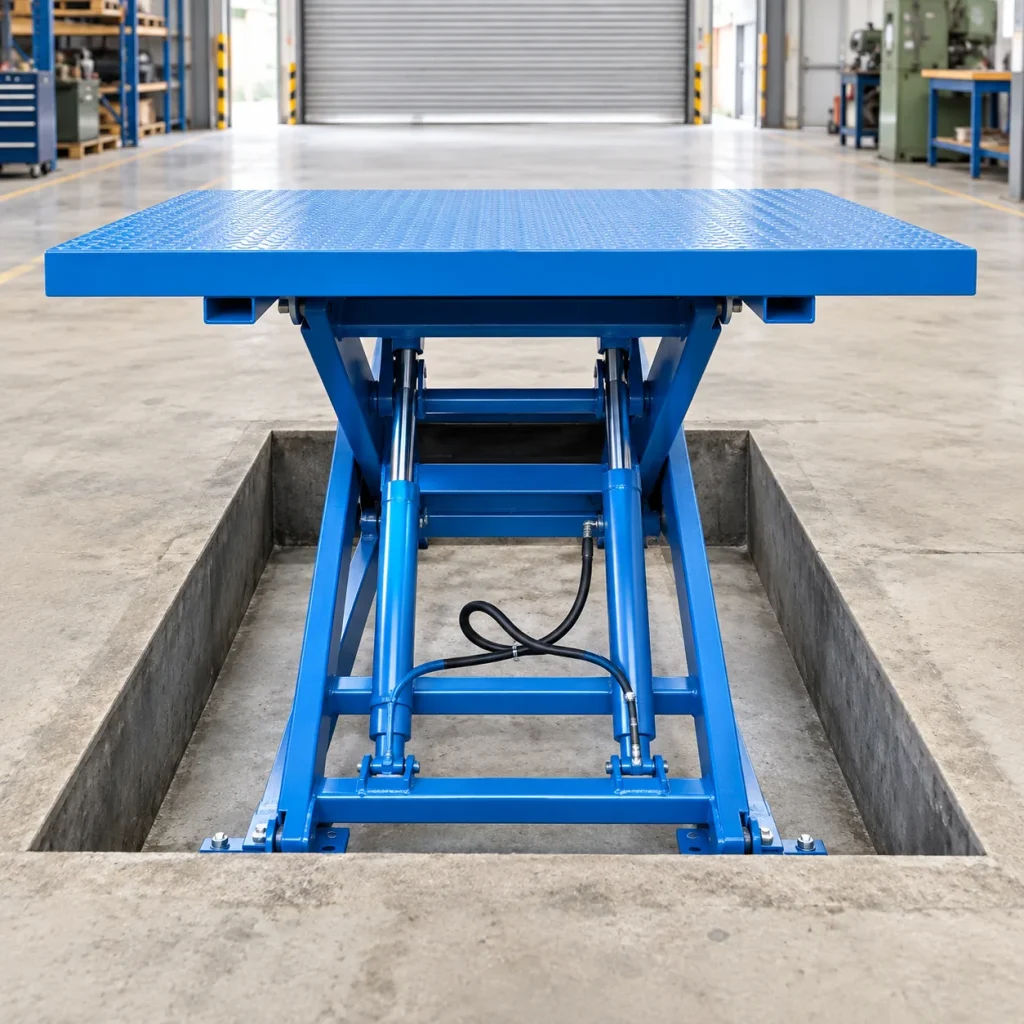
Factory lifting platforms remove repeated manual handling between work heights, machines, mezzanines and storage levels. The featured image shows a pit-mounted hydraulic scissor lift with the deck close to floor level. This arrangement can create a smooth approach for carts or pallet handling when the platform is lowered.
Successful selection begins with the task around the lift. The best platform is the one that fits the load, approach, cycle frequency and building while providing a practical way to operate and maintain the equipment.
Map the material-handling process
Observe how the load reaches the platform, how it is positioned and where it goes after lifting. Record the handling device—hand pallet truck, cart, forklift, conveyor or another machine—and note the direction of entry and exit. These details affect deck size, wheel-stop requirements, guardrails, gates and control locations.
If the platform will be integrated with a production line, define the signal exchange and safe sequence between machines. Mechanical alignment and controls should be reviewed together.
Use complete load data
Rated capacity alone does not describe the forces on a platform. Share the maximum total load, footprint, number and position of wheels or support points, and any off-centre loading. A rolling load may create concentrated wheel forces that differ from an evenly distributed load.
Also define the required lifting height, lowered height and duty cycle. Frequent operation, a demanding environment or long travel may change the hydraulic, structural and thermal considerations.
Choose a lifting arrangement that fits the space
Scissor mechanisms provide a stable deck and are commonly used for vertical positioning or transfer between nearby levels. Guided platforms can be useful for greater travel or multi-level goods movement. The supplier should explain the selected arrangement and show how it fits the available footprint, pit, overhead space and surrounding structure.
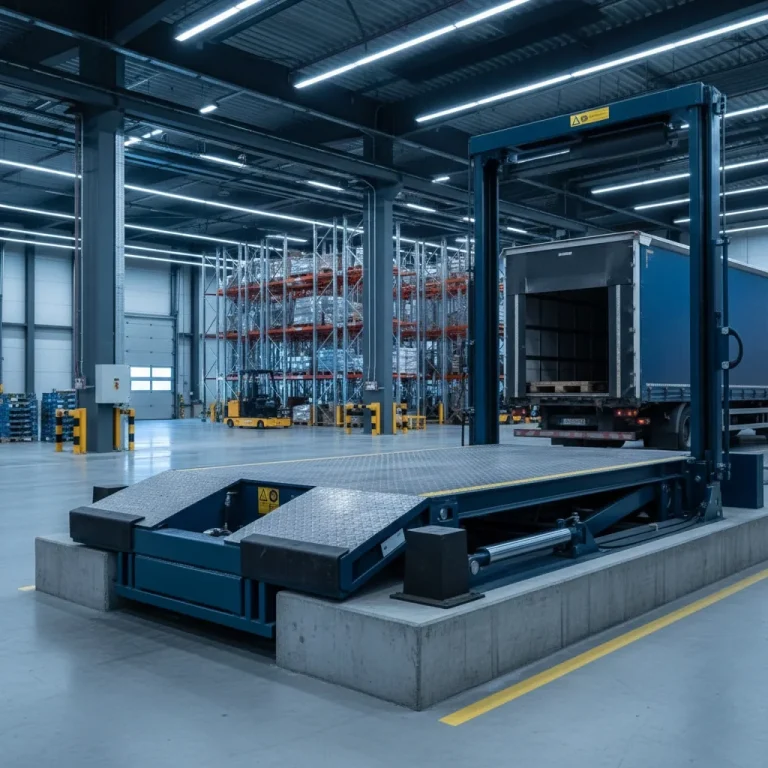
For an existing floor, verify whether excavation is possible and whether there are buried services. A surface-mounted platform with a ramp may avoid a pit, but it changes the approach height and space requirement.
Coordinate controls and safeguards
Control stations should give the operator a clear view while keeping people away from moving parts. Depending on the risk assessment, the system may need emergency stops, travel limits, overload protection, hose-failure protection, controlled lowering, gates, skirts, perimeter protection or anti-trap devices.
The surrounding process matters as much as the machine. Mark the operating zone, control access and prevent loads or traffic from entering the mechanism area. Requirements vary by equipment type and destination, so the final design must be reviewed for the installation.
Select the deck and accessories for the product
A slip-resistant steel deck suits many industrial tasks, while rollers, ball-transfer units, turntables or special fixtures may help a specific process. Accessories should be selected from actual load movement and cleaning conditions. Adding features without a defined purpose can make the system harder to maintain.
Prepare the installation area
Before delivery, confirm foundation strength, pit dimensions, drainage, fixing points, incoming power and cable routes. Provide enough access to unload and position the equipment. Where the platform sits flush with a floor, small dimensional errors can affect alignment, so inspect civil work against the approved drawing before installation.
Plan inspection and maintenance access
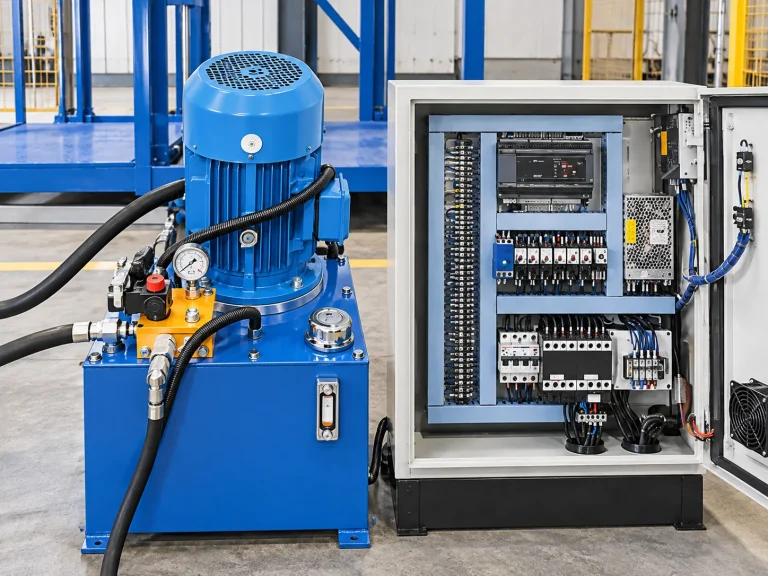
A factory platform should be easy to inspect without exposing personnel to an unsupported load. Confirm the mechanical maintenance support, isolation procedure and access to pivots, cylinders, hoses, the power unit and electrical cabinet. Follow the supplier’s lubrication and inspection schedule and increase attention where dust, moisture, wash-down or high cycle counts are present.
Operators should report leakage, damaged guards, unusual noise, uneven travel or changed stopping positions promptly. Early investigation can prevent a small issue from becoming prolonged downtime.
Factory lifting-platform enquiry checklist
- Maximum load, dimensions, wheel positions and centre of gravity
- Required deck size, travel and lowered height
- Loading equipment and access direction
- Cycles per hour or day and shift pattern
- Pit, floor, footprint and overhead constraints
- Indoor or outdoor environment, dust, moisture and temperature
- Control sequence and connection to conveyors or machines
- Destination, power supply and applicable site requirements
Frequently asked questions
Can a lifting platform be installed without a pit?
Often yes, using a surface-mounted arrangement and suitable approach. The available space, lowered height, loading method and guarding must be assessed.
How large should the deck be?
It should support the complete load footprint and loading method without unsafe overhang, while fitting the site and required clearances.
Can the platform connect to an automated line?
Many platforms can be configured with sensors and control interfaces, but the sequence and safety responsibilities between systems must be defined during engineering.
Designing a factory lifting point? Send Hongli your load and layout information so we can discuss the required platform arrangement.