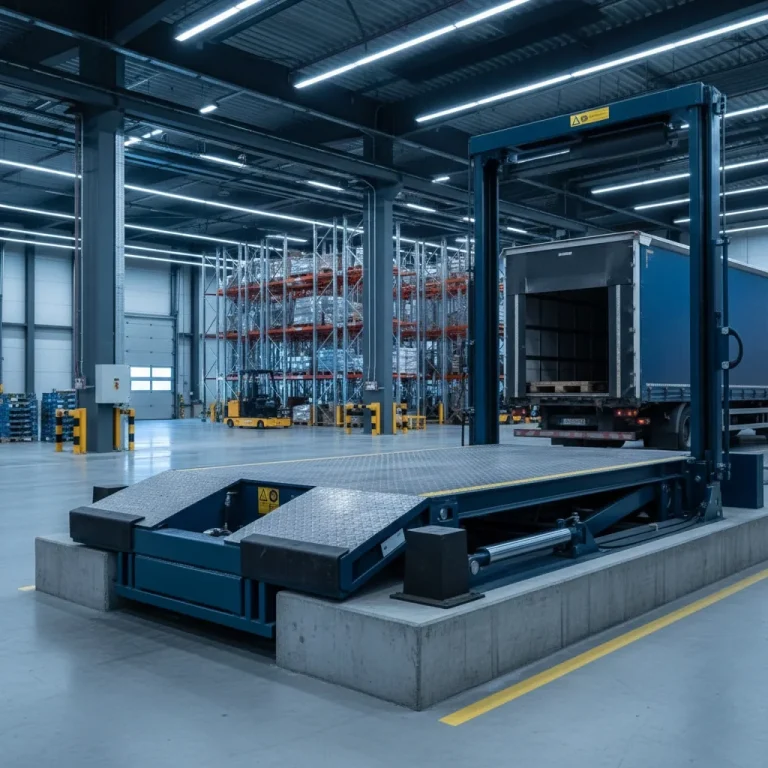
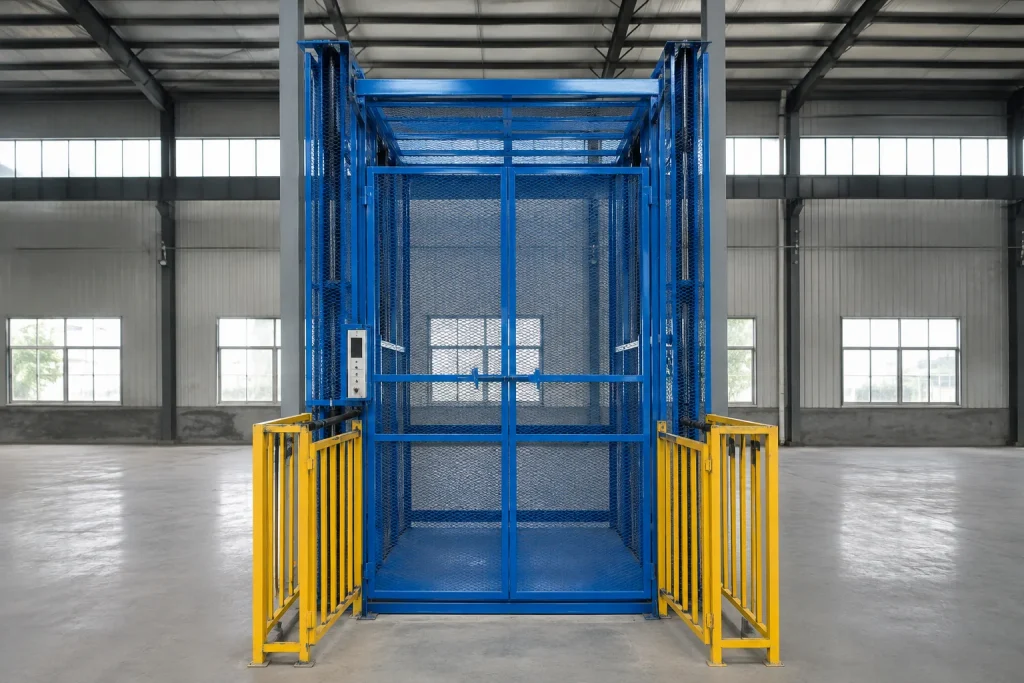
A hydraulic lifting platform may be a compact table beside a production line or a guided goods platform travelling between floors. The featured image shows a guided cargo platform with a protected carrier and landing-area barriers. Equipment of this kind must be designed around the load path, building openings and operating sequence rather than selected from capacity alone.
The right supplier turns application information into a clear technical scope, explains the limits of the equipment and coordinates the interfaces that affect installation. The following checks help buyers compare suppliers on engineering quality and lifetime support.
Start with the operating requirement
Define what will be moved, who will load it and how goods enter and leave the platform. Record the maximum load, load dimensions, centre-of-gravity concerns, platform size, vertical travel, number of stops, required closed height and estimated cycles per hour or day.
Also explain the site: indoor or outdoor, new or existing building, available pit and headroom, surrounding traffic, temperature, moisture, dust and power supply. A supplier should review these conditions before recommending a standard model or proposing a custom structure.
Confirm the intended use and classification
Goods-only lifting equipment must not be treated as a passenger lift. Tell the supplier whether an operator ever needs to enter the carrier during loading and how controls will prevent unintended travel. The equipment category, guarding and approvals depend on the intended use and destination market, so applicable local rules should be confirmed with the responsible local professionals.
Review the complete safety concept
Ask the supplier to describe foreseeable hazards and the proposed controls. Depending on the machine and site, these may address overload, unintended descent, hose or pipe failure, over-travel, open landing gates, emergency lowering, access beneath the platform and loss of electrical power.
Safeguards should work as a coordinated system. For example, an interlocked gate depends on correct mechanical installation, electrical wiring and the operating sequence. Bypassing a device to solve an interface problem creates a new risk; responsibilities must be resolved during design review.
Demand drawings before manufacturing
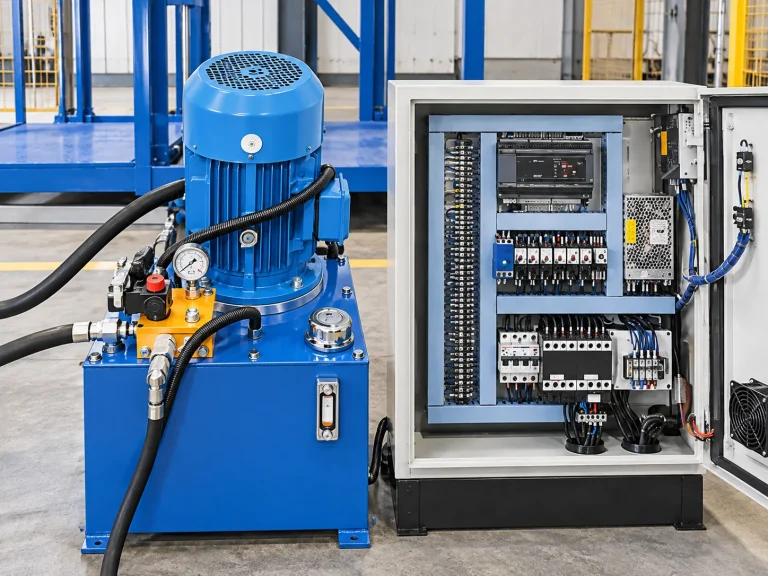
A useful approval package identifies platform and overall dimensions, travel, stop positions, pit or ramp, guide structure, fixing points, gates, clearances, power-unit location and electrical data. The buyer should check the drawing against the real building and material flow. Any change should be documented before it reaches production.
For an existing site, measured dimensions and photographs are essential. If possible, coordinate the supplier, builder and installer before foundations, openings or steel supports are finalized.
Understand manufacturing and inspection
Ask how materials, welding, hydraulic assembly, electrical wiring and surface preparation are controlled. The supplier should be able to explain the inspection process for the agreed configuration and how the equipment will be prepared for shipment. For large systems assembled on site, distinguish factory checks from final commissioning tests.
Plan installation, commissioning and training
The quotation should state who unloads the equipment, provides lifting tools, completes civil work, installs gates and guards, supplies incoming power, connects interfaces and performs commissioning. It should also define what installation guidance is included and whether on-site support is available.
Before handover, operators need instruction on normal use, load limits, emergency actions and daily checks. Maintenance personnel need the final drawings, isolation requirements, mechanical support procedure and service schedule.
Compare total project value
Purchase price is only one part of the decision. Include building changes, installation, controls, guarding, freight, customs, commissioning, consumables and expected spare parts. A clearly specified platform may cost more initially but reduce site changes and uncertainty later.
Information for a faster quotation
- Load weight, dimensions and loading method
- Required platform length and width
- Vertical travel, number of stops and floor-to-floor dimensions
- Pit depth, headroom and available installation footprint
- Operating frequency and required speed, if defined
- Indoor or outdoor conditions and surface-finish expectations
- Power supply, destination country and site photos or drawings
- Required gates, controls and connections to other equipment
Frequently asked questions
Can a hydraulic lifting platform be customized?
Platform dimensions, travel, guarding, access direction, controls and finish can often be configured, subject to engineering review and the relevant project requirements.
Do existing buildings always need a deep pit?
No. Some applications can use a shallow pit, surface-mounted arrangement or access ramp. The resulting closed height, approach and guarding must still suit the workflow.
What should be approved before paying for production?
Confirm the written specification, general arrangement drawing, commercial scope, delivery terms, documentation, inspection method and responsibilities for installation and commissioning.
Comparing hydraulic lifting solutions? Send your load, travel and site dimensions to Hongli for an application review.